Currently Empty: ₹0.00

LangChain
0 Comments
Introduction to LangChain
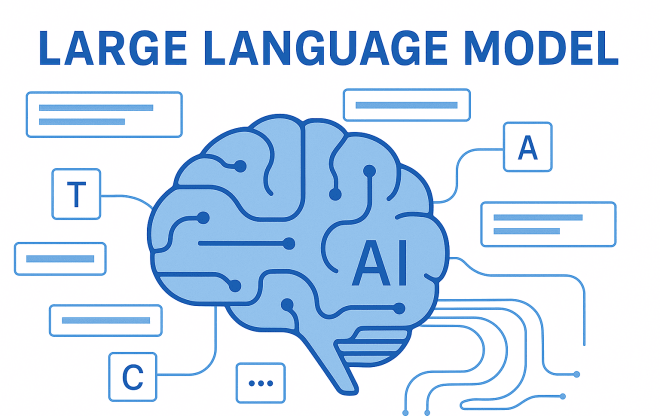
LangChain is a powerful open-source framework designed to build applications that leverage Large Language Models in a structured and scalable way. Instead of relying on single prompts or static responses, LangChain enables developers to create multi-step workflows, intelligent agents, and decision-making systems.
LangChain abstracts the complexities of prompt management, model interaction, memory handling, and tool integration, allowing developers to focus on building intelligent behavior rather than managing low-level implementation details.
LangChain Architecture
The LangChain architecture is modular and extensible. It consists of interconnected components such as:
- LLM interfaces
- Prompt templates
- Chains
- Agents
- Memory modules
- Tool integrations
- Retrievers and vector stores
This modular design allows developers to build anything from simple conversational bots to complex autonomous agents that interact with multiple external systems.
Chains, Agents, and Tools
Chains represent sequential workflows where each step processes input and produces output for the next step. Chains are ideal for deterministic workflows like document summarization or data transformation.
Agents, on the other hand, introduce dynamic decision-making. An agent evaluates the user request, decides which tool or action to use, and executes it iteratively until the goal is achieved.
Tools enable agents to interact with the outside world, such as:
- REST APIs
- Databases
- Search engines
- File systems
- Code execution environments
This combination allows AI agents to act intelligently rather than just respond textually.
Prompt Templates
Prompt templates are reusable, parameterized prompts that ensure consistent communication with LLMs. Instead of hardcoding prompts, LangChain allows dynamic prompt creation using variables, context, and memory.
Effective prompt templates improve:
- Accuracy
- Response consistency
- Maintainability
- Scalability across applications
Memory and Context Handling
Memory is a key differentiator between basic chatbots and intelligent agents. LangChain supports various memory strategies, including:
- Conversation buffer memory
- Summary memory
- Entity memory
- Vector-based long-term memory
These memory systems enable agents to remember past interactions, user preferences, and contextual information, resulting in more natural and coherent conversations.
LangChain with OpenAI and Other LLMs
LangChain provides seamless integration with multiple LLM providers such as OpenAI, Anthropic, Google, and open-source models. This abstraction layer allows developers to switch models without rewriting application logic.
It also supports advanced features like response parsing, output validation, and error handling, making production deployments more reliable.
LangChain with RAG
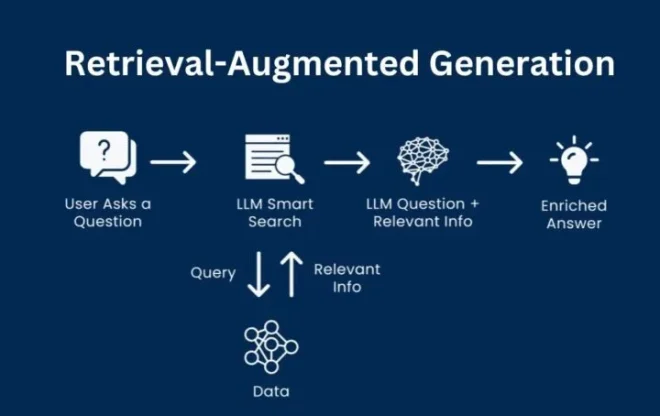
LangChain plays a crucial role in implementing RAG pipelines. It orchestrates document retrieval, embedding generation, similarity search, and response generation, enabling agents to provide accurate and context-aware answers grounded in real data.
Real-World Use Cases of LangChain
- AI-powered customer support systems
- Intelligent testing and QA assistants
- Automated DevOps and monitoring agents
- Knowledge management systems
- AI-driven search and recommendation engines